How Long Does Wine and Spirits Last After Opening?
Posted on 23 October, 2026
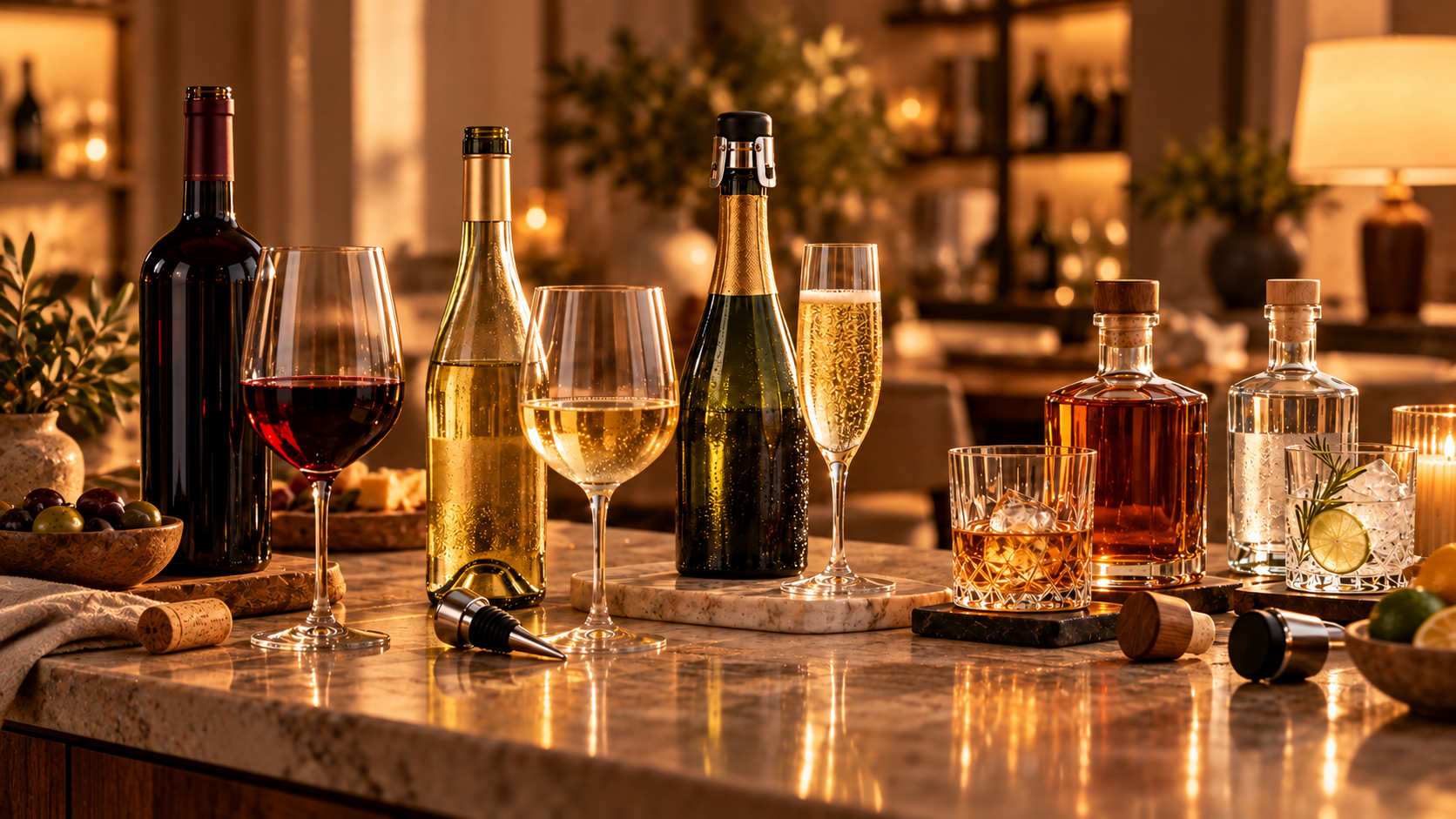
Opening a bottle does not always mean it needs to be finished that same evening.
Some wines will remain enjoyable for several days. Fortified wines can last considerably longer, while many spirits can stay in good condition for months or even years after opening.
The difference comes down largely to oxygen, alcohol level, storage temperature and the type of drink.
Knowing how to store an opened bottle properly can help preserve its flavour and avoid unnecessary waste.
Why Does an Open Bottle Change?
Once a bottle is opened, oxygen begins interacting with the liquid.
For wine, this process can happen relatively quickly. A small amount of oxygen can initially help a wine open up and become more expressive, but prolonged exposure gradually causes aromas and flavours to fade.
Eventually, the wine may begin to taste flat, tired or oxidised.
Spirits behave differently. Because of their much higher alcohol content, whisky, gin, vodka, rum and similar spirits are considerably more stable. They do not suddenly spoil after opening, although their flavour can gradually change over a long period, especially when there is very little liquid left in the bottle.
Sparkling Wine
Sparkling wine begins losing carbonation from the moment the bottle is opened.
Champagne, Cava, Prosecco and other sparkling wines should therefore be resealed with a proper sparkling wine stopper and refrigerated immediately.
Most sparkling wines are best consumed within a few days.
Traditional-method sparkling wines such as Champagne and Cava can sometimes retain their bubbles longer than tank-method wines such as Prosecco.
A good stopper is far more effective than the old trick of placing a teaspoon in the bottle neck.
The spoon method does not preserve the bubbles.
White Wine
Most opened white wines remain enjoyable for approximately three to five days when properly closed and refrigerated.
Freshness, fruit and aroma will gradually decline after opening.
Crisp Sauvignon Blanc, Pinot Grigio and similar styles may start losing some of their vibrant character relatively quickly, while richer wines such as Chardonnay may sometimes remain enjoyable for slightly longer.
Always reseal the bottle and return it to the refrigerator after pouring.
Rosé Wine
Rosé behaves similarly to white wine.
Once opened, it should be resealed and refrigerated.
Around three to five days is a useful general guideline, although the exact time depends on the individual wine.
Freshness is particularly important with rosé, so it is usually best enjoyed sooner rather than later.
Red Wine
One of the most common misconceptions is that opened red wine should remain on the kitchen counter.
In reality, opened red wine should also be refrigerated.
Cooler temperatures slow oxidation, helping the wine remain fresher for longer. WSET notes that a resealed red or white wine kept in the refrigerator can remain relatively fresh for up to around five days.
When ready to drink it again, simply remove the red wine from the fridge beforehand and allow it to warm gradually toward its ideal serving temperature.
Fuller-bodied and more tannic reds often cope with oxygen slightly better than very delicate wines.
Sweet Wine
Sweet wines often survive longer than dry wines because sugar and, in some cases, higher alcohol levels help preserve them.
Depending on the style, an opened sweet wine may remain enjoyable for approximately five to seven days or longer when refrigerated and properly sealed.
Some richer dessert wines can last considerably longer.
As always, aroma and taste are better indicators than simply counting days.
Fortified Wine
Port, Sherry, Madeira and other fortified wines contain more alcohol than ordinary table wine, which generally helps them remain stable for longer.
However, there is no single rule for all fortified wine.
A fresh, delicate Fino Sherry should be treated differently from a mature Tawny Port or Madeira.
Some styles are best consumed within days or weeks, while others can remain in excellent condition for months after opening.
Always check the producer’s recommendations where possible.
Vermouth: The Bottle People Often Store Incorrectly
Vermouth may sit beside gin, whisky and other spirits behind a bar, but technically it is fortified and aromatised wine.
That distinction matters.
Once opened, vermouth begins oxidising just like wine.
It should therefore be stored in the refrigerator, not permanently left on a room-temperature drinks shelf.
For the freshest flavour, particularly when making Martinis, Manhattans or Negronis, it is sensible to use an opened bottle within roughly a month.
WSET specifically recommends refrigerating opened vermouth and sealing it well because oxidation begins once the bottle is opened.
Whisky
Whisky is considerably more stable than wine.
An opened bottle can remain enjoyable for a very long time if it is:
- Properly sealed
- Stored upright
- Kept away from sunlight
- Protected from excessive heat
- Stored at a reasonably stable temperature
Whisky does not continue ageing once it leaves the barrel.
Over time, however, oxygen and evaporation can gradually change the liquid inside an opened bottle. This becomes more noticeable when the bottle is nearly empty because there is more air relative to the amount of whisky remaining.
The Macallan recommends considering transferring whisky into a smaller bottle once less than roughly one-third remains, reducing the amount of air inside the container.
An opened whisky bottle therefore does not normally need to be finished within weeks or months.
Stored correctly, it can remain enjoyable for years.
Gin
Gin also has a high enough alcohol content to remain stable for a long period after opening.
However, gin relies heavily on aromatic botanicals such as juniper, citrus peel, herbs and spices.
Over an extended period, these delicate aromas may gradually lose intensity.
Store gin upright, tightly closed and away from direct light or heat.
There is generally no need to refrigerate ordinary gin.
Vodka
Vodka is one of the most stable spirits.
Because it usually contains fewer delicate flavour compounds than highly aromatic spirits, an opened bottle can remain in very good condition for years when properly sealed and stored.
Keep it away from direct sunlight and excessive temperature fluctuations.
Vodka may be refrigerated or frozen for serving preference, but refrigeration is not necessary for preservation.
Rum
Rum can also remain stable for years after opening.
Dark and aged rums may gradually lose some aromatic intensity through prolonged exposure to oxygen, particularly once the bottle becomes mostly empty.
As with whisky, keep rum upright, properly closed and away from heat and sunlight.
Tequila and Mezcal
Tequila and mezcal do not usually spoil quickly after opening.
However, their aromas can slowly change over time, especially with highly expressive agave spirits where vegetal, earthy, smoky or floral characteristics form an important part of the experience.
Keep the bottle sealed tightly and stored upright in a cool, dark place.
Liqueurs
Liqueurs vary enormously.
High-alcohol liqueurs containing sugar may remain stable for long periods, but products containing cream, dairy or other ingredients require more attention.
Always follow the producer’s instructions and best-before date.
For example, Baileys states that Baileys Original has a shelf life of two years from bottling, whether opened or unopened, when stored under its recommended conditions.
This is why it is better not to apply one universal rule to every liqueur.
Does Alcohol Go Bad?
Wine usually becomes unpleasant through oxidation rather than becoming suddenly unsafe to drink.
You may notice:
- Faded fruit
- A flat or dull aroma
- Brownish colour
- Nutty or bruised-apple aromas where they should not be present
- A sharp or vinegary character
With spirits, quality deterioration is usually slower.
If the bottle has been stored properly and there are no unusual aromas, contamination or damaged closures, the main issue is normally declining flavour rather than a sudden expiry.
Five Simple Rules for Open Bottles
To get the best from any opened bottle:
- Close It Immediately
Do not leave bottles open unnecessarily.
The less exposure to air, the better.
- Refrigerate Open Wine
White, rosé and sparkling wine obviously belong in the refrigerator, but opened red wine benefits from refrigeration too.
- Keep Wine Bottles Upright After Opening
Keeping an opened bottle upright reduces the surface area of wine exposed to oxygen.
- Keep Spirits Away from Sunlight
Heat and UV light can gradually damage spirits and accelerate evaporation.
A closed cabinet or cool shelf is preferable to a sunny kitchen counter.
- Watch the Amount Left in the Bottle
A nearly full whisky bottle may change very slowly.
A bottle containing only a small amount has much more air inside it and may change faster.
For particularly valuable spirits, transferring the remainder into a smaller clean glass bottle can help reduce oxygen exposure.
The Refrigerator Is More Useful Than You Think
Perhaps the most useful rule is also the easiest to remember:
Once ordinary wine is opened, put it in the fridge.
That includes red wine.
Cool temperatures slow down the chemical reactions involved in oxidation.
And one other bottle deserves a permanent place in the refrigerator after opening:
Vermouth.
Treat it as wine, not as gin or whisky.
Enjoy It While It Is at Its Best
There is a difference between a bottle being technically drinkable and being at its best.
Wine is particularly sensitive to oxygen, and its fresh aromas can disappear long before there is anything obviously wrong with it.
Spirits offer much more time, but proper storage still matters.
A few simple habits — resealing bottles, refrigerating wine, avoiding heat and keeping spirits away from sunlight — can preserve both quality and enjoyment.
And sometimes the best preservation method is still the simplest one:
Invite someone to share the bottle.


Continue Reading
30 September, 2026
Whisky Made Simple: Understanding the Different Styles

14 September, 2026
What Wine Goes with Mediterranean Food? A Simple Pairing Guide