What Wine Goes with Mediterranean Food? A Simple Pairing Guide
Posted on 14 September, 2026
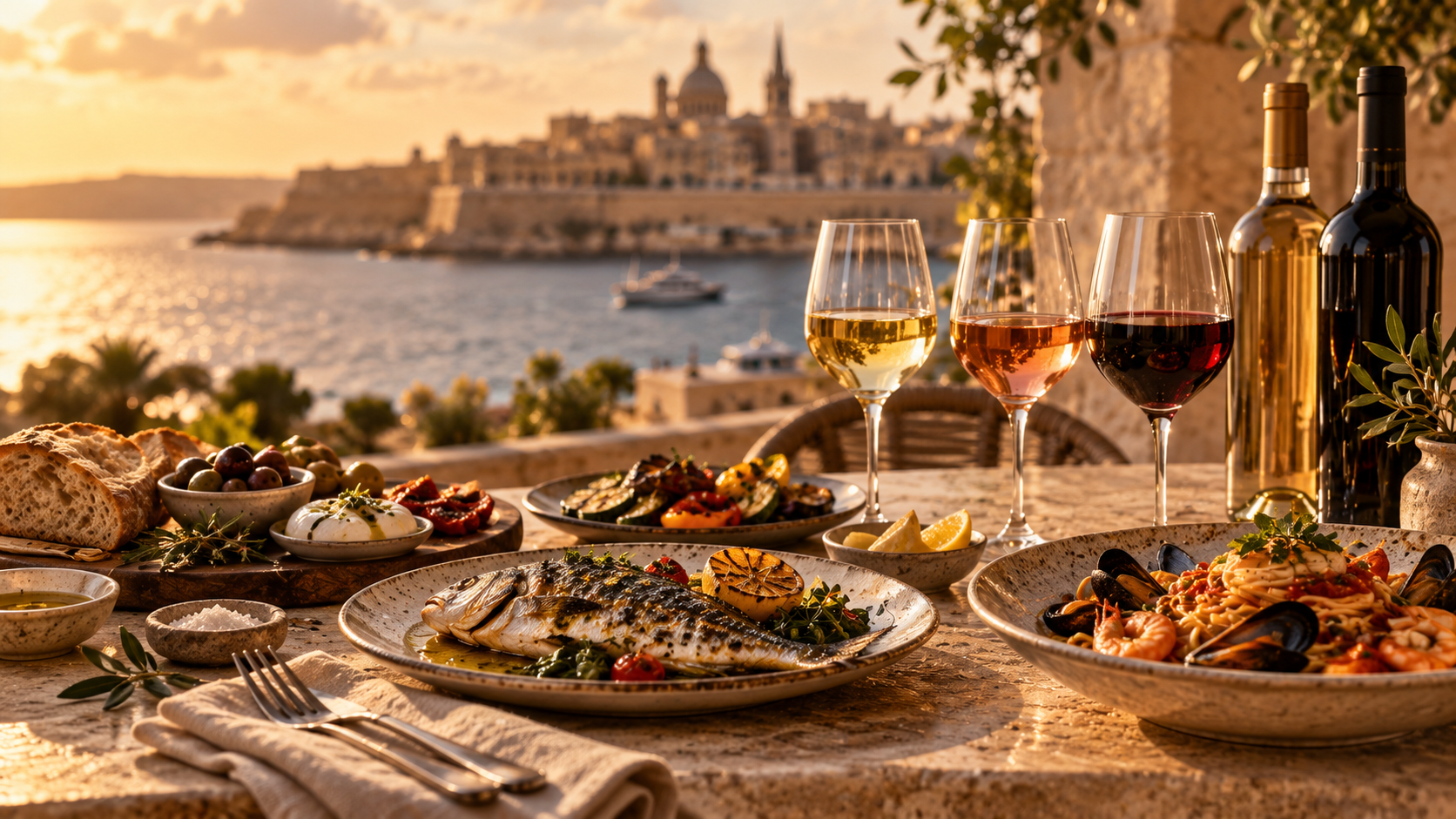
Mediterranean food and wine have developed alongside one another for centuries, so it is hardly surprising that they work so naturally together.
Fresh fish, shellfish, tomatoes, olive oil, herbs, grilled vegetables, pasta and roasted meats all offer countless possibilities for wine pairing. Yet choosing the right bottle does not need to involve complicated rules.
A few simple principles can make pairing wine with Mediterranean food considerably easier.
The most important rule is also the simplest: the wine should complement the food rather than overpower it.
Fresh Fish and Seafood
Mediterranean cooking offers an enormous variety of fish dishes, from simply grilled sea bass and sea bream to octopus, calamari and shellfish.
With delicate grilled fish, fresh white wines are usually an excellent choice.
Look towards wines made from grapes such as:
Their freshness and acidity work particularly well with lemon, olive oil and herbs.
A crisp Vermentino alongside grilled sea bass is a classic Mediterranean combination. The wine has enough freshness to complement the fish while its subtle herbal and citrus character works naturally with simple Mediterranean seasoning.
Calamari and Fried Seafood
Fried calamari calls for freshness.
A wine with lively acidity helps cleanse the palate after the richness of fried food, making sparkling wine an especially good choice.
Prosecco, Crémant or a fresh dry white can all work beautifully.
The bubbles and acidity provide contrast to the crispy coating without overwhelming the relatively delicate flavour of the seafood.
For something still, consider a crisp Sauvignon Blanc, Grillo or dry Vermentino.
Octopus
Octopus can change considerably depending on how it is prepared.
A fresh octopus salad with lemon, parsley and olive oil works well with a crisp white wine or dry rosé.
Grilled octopus, however, develops deeper and smokier flavours. A structured white wine or even a light red served slightly chilled can then become an interesting alternative.
The cooking method matters just as much as the ingredient itself.
Tuna
Tuna is one of the rare fish that can comfortably work with both white and red wine.
For fresh or lightly seared tuna, consider Chardonnay, Vermentino or Sauvignon Blanc.
When tuna is grilled and served with tomatoes, olives, capers or richer Mediterranean sauces, a light-bodied red can also work exceptionally well.
Pinot Noir is one possibility, while lighter Mediterranean reds can provide enough fruit and freshness without dominating the fish.
Tomato-Based Pasta
Tomato is naturally acidic, and that acidity is important when choosing a wine.
Very soft or heavily oaked wines can sometimes seem flat alongside a lively tomato sauce. Wines with good natural acidity generally perform much better.
Italian varieties are obvious candidates.
Sangiovese works beautifully with many tomato-based pasta dishes because its acidity mirrors that of the tomato.
Nero d’Avola can work particularly well when the sauce becomes richer, while Montepulciano d’Abruzzo offers another very versatile choice.
For a simple spaghetti al pomodoro, there is little need to select an extremely powerful wine. Freshness and balance matter more than weight.
Pasta with Seafood
Seafood pasta often combines shellfish, garlic, herbs, olive oil and occasionally tomato.
A dry, fresh white is usually the safest choice.
Falanghina, Vermentino, Grillo and Sauvignon Blanc all have enough acidity to remain refreshing while allowing the flavour of the seafood to remain central.
For creamy seafood pasta, a fuller white such as Chardonnay can provide the additional body needed to match the sauce.
Pizza
There is no single wine for pizza because the topping changes everything.
For a classic Margherita, medium-bodied Italian reds with fresh acidity work extremely well. Sangiovese, Barbera and Montepulciano are all excellent options.
Pizza with spicy salami or stronger meat toppings can handle something richer, such as Nero d’Avola or Primitivo.
White pizza topped with cheese, mushrooms or vegetables can pair surprisingly well with Chardonnay or a textured Italian white.
Even sparkling wine deserves consideration. Its acidity and bubbles cut through melted cheese particularly well.
Rabbit
Rabbit has an important place in Maltese cuisine and provides an interesting wine-pairing opportunity.
The ideal choice depends heavily on preparation.
Rabbit cooked slowly with wine, garlic, herbs and a rich sauce can comfortably accompany a medium- to full-bodied red.
Sangiovese, Syrah, Merlot or a structured Maltese red can all work well.
The objective is to find enough body to stand beside the sauce without selecting something so powerful that the delicate flavour of the meat disappears.
Grilled Beef and Steak
Grilled red meat remains one of the easiest foods to match with a substantial red wine.
Cabernet Sauvignon is a classic choice because its tannins and structure work exceptionally well with beef.
Other excellent options include:
- Syrah or Shiraz
- Malbec
- Cabernet-based Bordeaux blends
- Brunello di Montalcino
- Amarone della Valpolicella
- Powerful Tuscan reds
The richer and fattier the cut of meat, the more structure the wine can usually carry.
With leaner meat, slightly softer reds may provide better balance.
Pork
Pork sits somewhere between white and red meat in terms of flavour intensity, which makes it extremely versatile.
Roasted pork works well with medium-bodied reds such as Pinot Noir, Barbera or Sangiovese.
If the dish includes fruit, sweetness or a glaze, a white wine with some aromatic character can also work beautifully.
For grilled pork seasoned with herbs, a Mediterranean red with fresh fruit and moderate tannin is often an excellent choice.
Grilled Vegetables
Wine pairing does not need to revolve around meat.
Grilled peppers, aubergines, courgettes, mushrooms and artichokes can create deep and complex flavours of their own.
Dry rosé is particularly versatile with Mediterranean vegetable dishes.
Sauvignon Blanc and Vermentino can complement dishes dominated by fresh herbs and green vegetables, while Pinot Noir and lighter Sangiovese styles can work well with mushrooms and grilled aubergine.
Antipasti and Sharing Platters
A Mediterranean antipasti platter might contain cured meats, cheeses, olives, vegetables, dips and bread — making it almost impossible for one wine to match every component perfectly.
The solution is versatility.
Dry rosé is one of the best choices because it provides the freshness of a white while carrying enough fruit and structure to work with charcuterie.
Sparkling wine is another excellent option.
For red wine, consider something fresh and medium-bodied rather than heavily tannic.
An antipasti platter is about sharing and variety, and the wine should follow the same philosophy.
Cheese
The idea that every cheese should automatically be served with red wine is one of the most common wine-pairing misconceptions.
Some cheeses work beautifully with red wine, but others are better with white, sparkling or sweet wines.
Fresh cheeses can pair well with Sauvignon Blanc or Vermentino.
Creamy cheeses often work wonderfully with Chardonnay or sparkling wine.
Mature hard cheeses such as Parmigiano Reggiano can handle structured reds.
Blue cheese can create an extraordinary contrast with sweet wines such as Port or dessert wine.
The stronger the cheese, the more character the wine generally needs.
Mediterranean Desserts
Sweet food requires one important rule: the wine should generally be at least as sweet as the dessert.
Moscato d’Asti is a wonderful partner for fruit desserts, pastries and lighter sweets.
Dessert wines can accompany richer pastries, while fortified wines may work beautifully with chocolate, nuts and mature cheeses.
Serving a dry wine alongside a very sweet dessert can make the wine taste unexpectedly sharp or bitter.
Rosé: The Mediterranean All-Rounder
Few wines suit Mediterranean dining as naturally as rosé.
Dry rosé can accompany seafood, salads, antipasti, grilled vegetables, chicken, pork, pizza and many pasta dishes.
That versatility makes it particularly useful when several different dishes are being served at the same table.
It is also one reason rosé has become so closely associated with relaxed Mediterranean dining.
When in Doubt, Think About the Sauce
One of the most useful principles in food and wine pairing is to pay attention to the sauce rather than just the main ingredient.
Grilled chicken with lemon and herbs might work beautifully with a white wine.
The same chicken served in a rich mushroom sauce may suit Chardonnay or even a light red.
Fish served simply with olive oil and lemon calls for freshness, while the same fish cooked with tomato, olives and capers may work with a more structured wine.
The preparation often tells more about the right wine than the protein itself.
There Is No Perfect Pairing
Wine pairing should make food more enjoyable, not turn dinner into an examination.
Personal taste always matters.
Two wines may both work with the same dish for completely different reasons. One may echo the flavours of the food while another provides contrast.
Mediterranean cuisine offers enormous variety, and that is exactly what makes exploring wine alongside it so enjoyable.
From crisp whites and elegant rosés to structured Italian reds and celebratory sparkling wines, there is a bottle for almost every Mediterranean table.
The best pairing is ultimately the one that makes both the food and the wine taste better.


Continue Reading